When travelers fly into Cusco Airport from sea level, their bodies adjust to air containing roughly one-third less oxygen pressure.
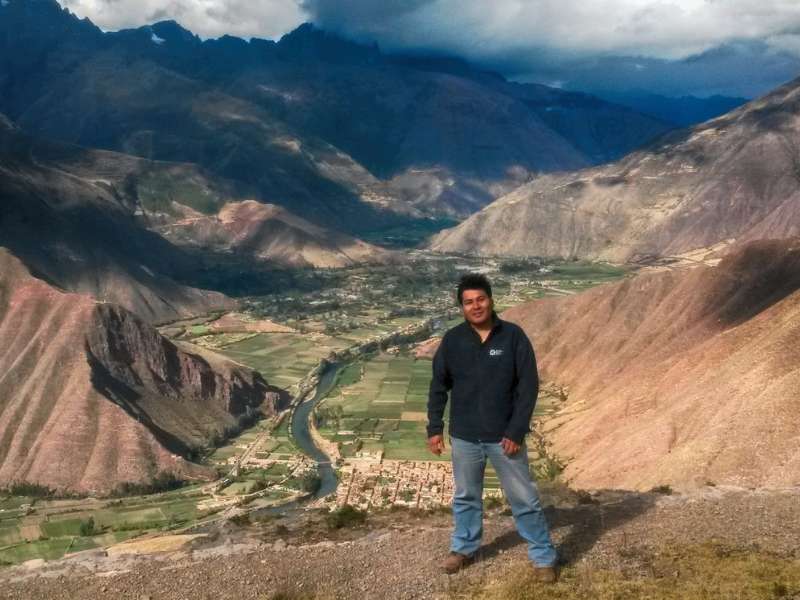
A practical strategy recommended by altitude specialists and local guides is heading down into the Sacred Valley early in your stay.
While Cusco sits at 3,399 meters (11,152 feet), the valley floor sits at 2,870 meters (9,416 feet) in Urubamba and 2,792 meters (9,160 feet) in Ollantaytambo. That 500-meter drop gives your body noticeably higher oxygen concentration, allowing red blood cells to adapt gradually while you explore important archaeological sites.
Last verified: November 2026. Entry ticket rules and municipal regulations follow official Boleto Turístico del Cusco (COSITUC) standards.
Why Altitude Pacing Favors the Sacred Valley First
Ascending gradually helps reduce common symptoms of Acute Mountain Sickness (AMS), such as mild headache or fatigue:
- Spending your first one or two nights at the lower elevation of Urubamba or Ollantaytambo allows the body to acclimate smoothly before moving to higher ground.
- For hikers preparing for multi-day treks like the Inca Trail or Salkantay, spending initial days walking among valley ruins provides active acclimatization.
The 4 Core Sites: Pisac, Ollantaytambo, Maras & Moray
A comprehensive Sacred Valley circuit covers four major examples of Incan architecture and agriculture:
- Pisac Archaeological Park (3,250 m): Located on a high ridge overlooking the Vilcanota River, Pisac features sweeping hillside agricultural terraces, cliffside burial niches, and ceremonial structures with wide valley vistas.
- Ollantaytambo Fortress & Town (2,792 m): Ollantaytambo preserves its original Inca town layout, complete with stone irrigation channels along street corners. Above town, monumental stone terraces lead up to the Temple of the Sun.
- Moray Agricultural Terraces (3,500 m): A series of concentric circular terraces carved into natural limestone depressions. The temperature variations between lower and upper tiers provided ancient agronomists with varying microclimatic conditions.
- Maras Salt Mines (Salineras de Maras - 3,200 m): Over 3,000 terraced evaporation ponds fed by a subterranean saline spring, harvested by local families using traditional evaporation methods since pre-Inca periods.
Boleto Turístico (BTC) & Maras Community Ticket
Site entry involves two separate systems:
- Boleto Turístico del Cusco (BTC): Required for entry to Pisac, Ollantaytambo, and Moray (as well as Chinchero). Visitors can purchase either the Boleto Parcial (Circuit III - S/ 70 Soles, valid for 2 consecutive days) or the Boleto Integral (S/ 130 Soles, valid for 10 days). These are purchased in cash (Peruvian Soles) directly at the entrance gates.
- Maras Community Ticket (S/ 20 Soles cash): Salineras de Maras is operated by the local community cooperative and is not included in the Boleto Turístico. An entry fee of S/ 20 cash per person is paid at the community access post.
Lunch Logistics in Urubamba
Because a full Sacred Valley circuit spans 8 to 9 hours, excursions typically pause in Urubamba:
- Urubamba is home to numerous garden restaurants offering buffet-style meals with roasted Andean trout, quinoa salads, native potatoes, corn, and fresh herbal teas like muña.
- Menus typically provide vegetarian and gluten-free options.
Timing & Departure Strategies
Standard group buses commonly leave Cusco around 7:30 AM to 8:00 AM, arriving at major ruins in large groups.
- Departing slightly earlier (around 6:45 AM–7:00 AM) or arranging a private transfer allows you to visit Ollantaytambo or Maras during quieter morning hours.
Field Recommendation: Day Tour vs. Overnight in the Valley
- Choose a 1-day Sacred Valley tour if your hotel base is in Cusco and you want a structured overview of the valley ruins before heading onward.
- Choose an overnight stay in the valley if you want gentler altitude on your first nights, relaxed pacing, and direct access to evening train departures from Ollantaytambo to Machu Picchu.