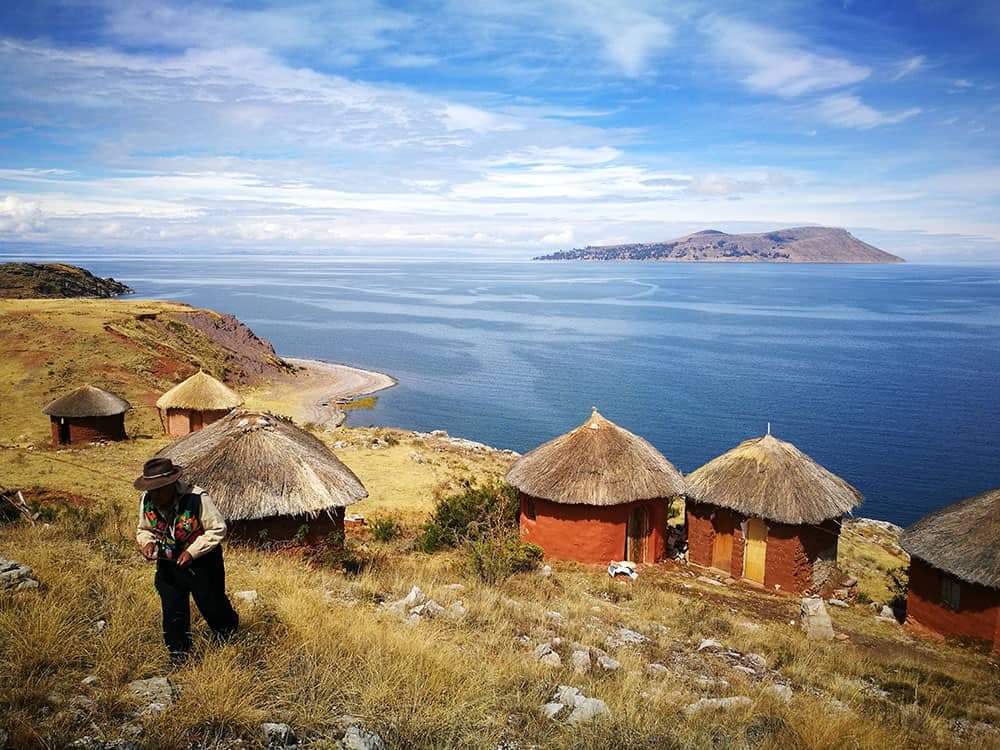

Resting between Peru and Bolivia at a breathtaking elevation of 3,812 meters (12,507 feet), Lake Titicaca is the highest navigable body of water on planet Earth.
Under its piercing cobalt-blue skies, ancient civilizations flourished millennia before the rise of the Incas. In Incan mythology, this sacred lake is the cradle of civilization—the exact spot where the Sun God Inti sent his children, Manco Cápac and Mama Ocllo, rising from the waters of the lake to establish the Inca Empire.
Today, many tourists visit only the famous floating reed islands of Uros, which have unfortunately become heavily commercialized and staged for rapid tour bus turnover.
If you seek genuine cultural immersion, you must travel deeper across the open waters to Amantaní Island.
On Amantaní, there are no cars, no roads, no hotels, and no running hot water. Instead, you sleep inside the simple adobe home of an indigenous Quechua family, eat meals cooked over wood fires, and participate in ancient spiritual rituals that have remained unchanged for centuries.
Here is the honest, guide-tested reality of what an overnight homestay on Amantaní Island is really like.
How the Community Rotation System Works
Tourism on Amantaní operates under a remarkable model of communal indigenous self-governance:
- The Rotation System: The island's population of roughly 4,000 residents is divided into 10 distinct agricultural communities (such as Pueblo, Lampayuni, and Occosuyo).
- When your wooden passenger boat arrives at the stone jetty, the community tourism council assigns arriving travelers to host families on a strict rotational basis.
- This democratic system ensures that tourism income is distributed equally across all families on the island, rather than concentrating wealth in the hands of a few commercial operators.
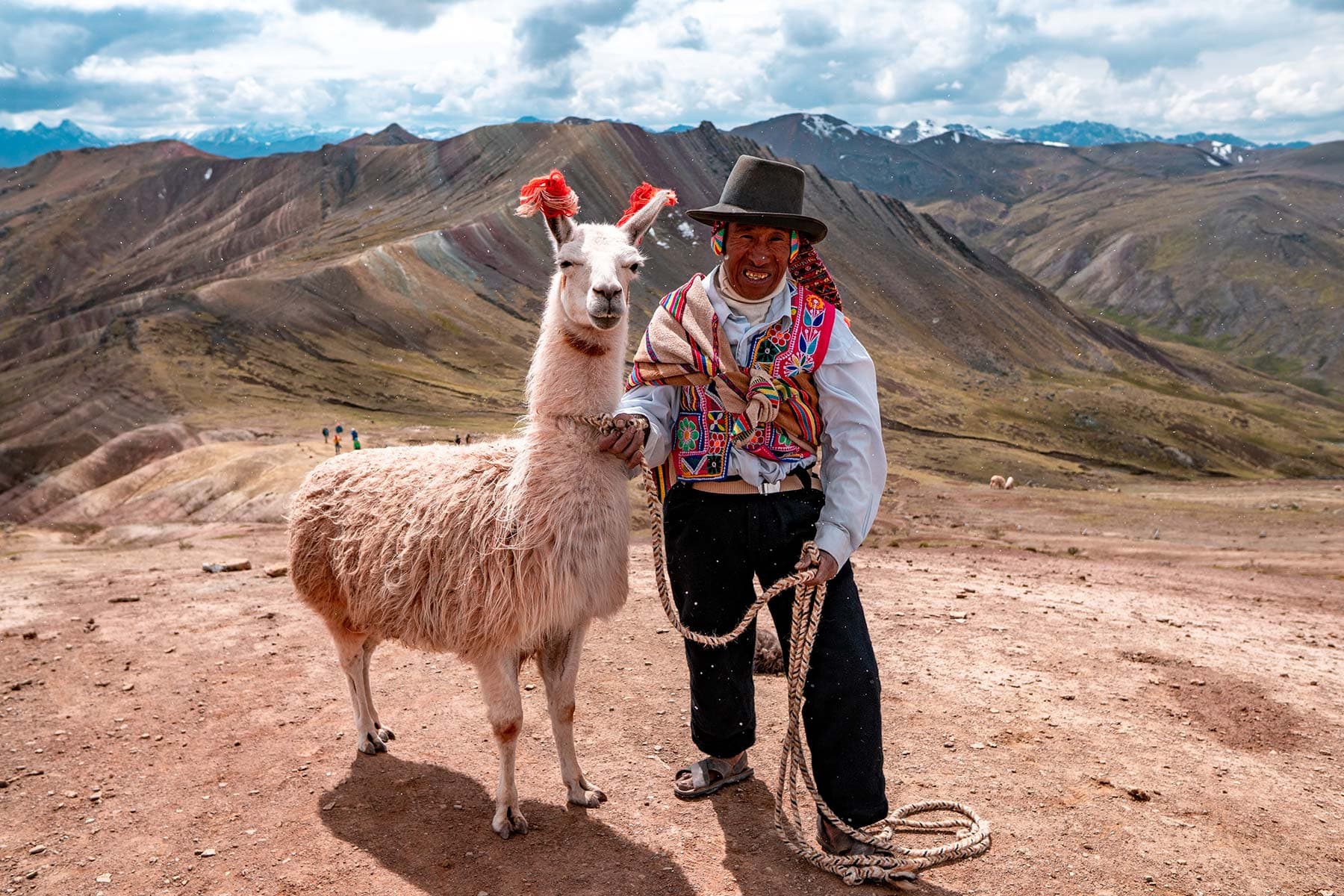
- The Host Family Welcome: Your host mother (Mamita) will meet you at the dock, dressed in her traditional multi-layered skirt (pollera), embroidered white blouse, and black lace shawl. She will lead you up the stone pathway to her family home.
Honest Room Realities: No Heating, Cold Water & Heavy Blankets
To enjoy Amantaní, you must set honest expectations: this is an authentic rural homestay, not a boutique luxury hotel.
- The Bedrooms: Simple, spotless rooms built of whitewashed adobe brick with wooden floorboards. Beds are equipped with clean cotton sheets topped by three or four thick, heavy handwoven sheep wool blankets (frazadas).
- The Temperature: At nearly 4,000 meters, night temperatures plunge to 0°C to 4°C (32°F to 39°F). There is zero electric heating or insulation. You will sleep wearing thermal long underwear, a warm fleece, and a beanie. Under the heavy blankets, you will be remarkably warm and cozy.
- The Bathrooms: Most homes now have modern flushing porcelain toilets and a sink with cold running water located in an outbuilding across the courtyard. There are no hot showers (the island's electrical grid cannot support high-draw water heaters).
- Electricity: Power is supplied by small solar panels on the roof, enough to power a single dim lightbulb in your room for a few hours. There are rarely electrical outlets to charge phones; carry a high-capacity portable power bank.
Dining with Your Host Family: Wood Stoves, Quinoa & Native Potatoes
Meals are prepared in the family kitchen over a traditional clay wood-burning stove (fogón):
- Lunch & Dinner Menu: The diet on Amantaní is predominantly vegetarian, healthy, and organic, harvested directly from the island’s terraced fields:
- Steaming bowls of sopa de quinua (quinoa soup with vegetables and oregano).
- Platters of boiled native Andean potatoes, sweet oca, and habas (fava beans).
- Thick slices of pan-fried Andean white cheese (queso frito) or fresh lake trout.
- Hot infusions of freshly picked muña (wild mint) to soothe digestion at high altitude.
- Dining Etiquette: You dine with your host family at a small wooden table in their kitchen or dining room. It is a warm, intimate opportunity to share stories, look at family photos, and practice your Spanish or basic Quechua phrases.
The Sunset Pilgrimage: Pachatata & Pachamama Temples (4,115m)
In the late afternoon around 4:00 PM, all travelers and islanders embark on the sacred hike to the island's twin mountain summits:
- Pachatata (Father Earth) and Pachamama (Mother Earth) rise to 4,115 meters (13,500 feet).
- The 45-minute uphill walk on stone stairs tests your lung capacity, but the summit reward is breathtaking.
- At the peak of Pachatata stands an ancient pre-Inca stone ceremonial sanctuary. Tradition dictates that you walk three times counter-clockwise around the temple walls while holding three coca leaves, making a silent wish for balance and protection to the Apus.
- The Sunset: As the sun dips toward the Bolivian horizon, Lake Titicaca’s vast waters turn from royal blue to fiery magenta, gold, and violet. Far across the water, the jagged, snowbound peaks of the Cordillera Real of Bolivia glow in the evening light.
The Evening Community Fiesta: Traditional Quechua Dress
After dinner, your host mother will appear with an armful of vibrant traditional garments:
- For Women: A brightly colored, flared pollera skirt, an embroidered blouse, a woven belt (chumpi), and a black fringed headscarf.
- For Men: A thick woven wool poncho and an ear-flapped chullo beanie.
Dressed in full Andean attire, you walk together under a canopy of stars to the local community hall.
Local musicians play lively traditional folk songs on panpipes (zampoñas), flutes (quenas), and wooden drums. Travelers and local families dance hand-in-hand in giant laughing circles across the concrete floor. It is joyful, unpretentious, and completely heartwarming.
Responsible Gift Etiquette: What to Bring (and What to Avoid)
It is customary to bring a small thank-you gift for your host family to show gratitude for their hospitality.
Responsible Gift Guide:
- DO BRING: Essential cooking staples that are expensive or hard to transport to the island: cooking oil, rice, lentils, oats, fresh fruit (oranges, apples), school notebooks, pens, and colored pencils for the children.
- DO NOT BRING: Never bring candy, lollipops, cookies, or sodas. Island children do not have regular dental care. Handing out sugar promotes severe tooth decay and fosters begging behavior.
Frequently Asked Questions (FAQ)
Can I combine Amantaní with Taquile Island?
Yes! The standard 2-day Lake Titicaca tour visits the Uros Floating Islands on Day 1 morning, sails to Amantaní Island for the homestay, and on Day 2 sails to Taquile Island (famous for its master male knitters recognized by UNESCO) for lunch before returning to Puno harbor by 4:00 PM.
How cold does it get at night on Lake Titicaca?
Because Lake Titicaca sits at 3,812 meters, the high-altitude air is thin and dry. During the dry season (May through August), night temperatures regularly drop to -2°C to 3°C (28°F to 37°F).
Is there phone signal on Amantaní?
Claro and Movistar have moderate 3G/4G cellular coverage on the higher ridgelines of the island, but signal can be spotty inside thick stone adobe homes.
Local Team Advice: Willy's Cultural Wisdom
As our Official Tour Guide Willy notes:
"If you want room service and marble bathrooms, stay in a hotel in Puno. But if you want to touch the living soul of the Andes, come to Amantaní. When you sit with your host family by the wood stove smelling the burning eucalyptus, and look up at a Milky Way so bright it casts shadows on the stone courtyard, you realize how rich a simple life in harmony with Pachamama truly is."