The 30-Second Verdict: How Safe is Peru Right Now?
Peru is fundamentally safe for international travelers who stick to established travel corridors and practice basic urban awareness.
Violent crime against foreign tourists is extraordinarily rare. Over 2.5 million international travelers explore Machu Picchu, Cusco, the Sacred Valley, and Lima each year without incident.
The real safety challenge in Peru is not cartel violence or personal assault—it is petty opportunism: pickpocketing in crowded markets, distraction scams, unlicensed airport taxis charging extortionate rates, and mobile phones snatched from hands on busy city corners.
If you avoid hailing random street cabs in Lima, keep your phone tucked away along dense avenues, and stay in monitored neighborhoods, your trip to Peru will be smooth, warm, and deeply memorable.
Lima Neighborhood Breakdown: Where to Stay & What to Avoid
Lima is a sprawling metropolis of 10 million people. Safety varies dramatically depending on which district you step into. For 95% of international visitors, your accommodation should be located in just two neighborhoods: Miraflores or Barranco.
← Desliza horizontalmente para comparar columnas →
| District / Region | Safety Level | Primary Risk | Ideal For | Ground Rules |
|---|---|---|---|---|
| Miraflores | Very High (4.8/5) | Occasional distraction theft in packed parks | Families, first-timers, foodies | Patrolled 24/7 by municipal Serenazgo. Safe to walk along the Malecón cliffs even after dark. |
| Barranco | High (4.5/5) | Pickpocketing around late-night bars | Couples, solo travelers, art lovers | Extremely safe around the main plaza and Bridge of Sighs (Puente de los Suspiros). Exercise caution on dark side streets after 1:00 AM. |
| San Isidro | Very High (4.9/5) | Minimal | Luxury travelers, business stays | Financial and embassy quarter. Very quiet, upscale, and safe, though with less nightlife and walking charm than Miraflores. |
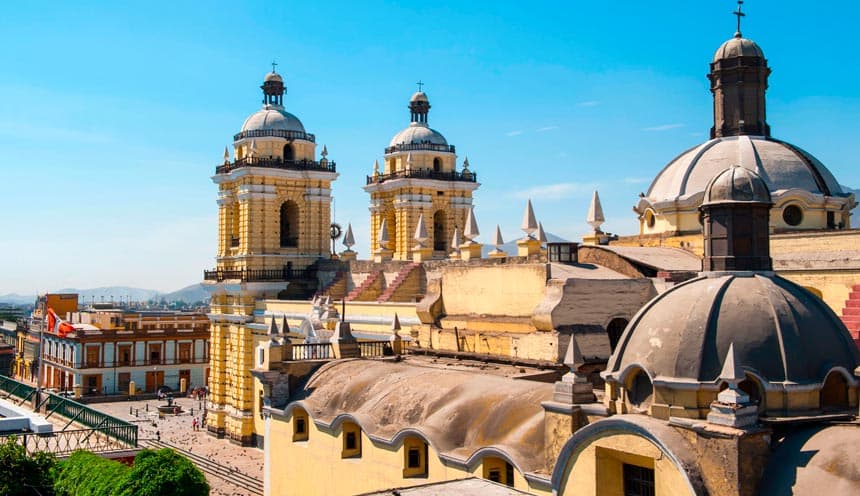
| Historic Center (Centro) | Moderate (3.2/5) | Pickpocketing, bag-slashing in markets | Daytime colonial architecture tours | Safe around Plaza Mayor and San Francisco during daylight. Do not wander into Barrios Altos or across the Rímac river bridges. Take an Uber back to Miraflores before sunset. |
| Callao (Port Area) | Low (1.5/5) | Armed robbery, street crime | Transit only (Airport is here) | Never walk outside the airport perimeter into Callao on foot. The cultural zone of Callao Monumental is safe only during organized daytime group visits. |
Jorge Chávez Airport (LIM): How to Avoid Taxi Scams
The international arrival at Lima’s Jorge Chávez International Airport (located in the province of Callao) is the moment when travelers are most vulnerable to scams.
The moment you clear customs and baggage claim, you will walk into an arrival concourse where dozens of men wave placards and aggressively shout "Taxi! Official taxi, my friend!". None of these men represent safe or regulated street options.
Here is the exact ground procedure to exit the airport safely:
- Inside the Baggage Hall (Safest Official Counters): Before you step through the sliding glass exit doors into the public concourse, you will see authorized corporate taxi kiosks: Taxi Green, Taxi 365, and Taxi Directo.
- The Price: A flat-rate transfer from Jorge Chávez Airport to Miraflores, San Isidro, or Barranco costs between S/ 60 to S/ 85 Soles ($18 to $25 USD). You pay by credit card directly at the desk before walking to the vehicle.
- App-Based Pickups (Uber / Cabify): Uber and Cabify operate legally at LIM airport. Follow the overhead terminal signs to the designated rideshare pickup curb in the main parking lot. Always verify the driver's license plate and name before opening the door.
- Never Walk into the Street: Never drag your luggage past the airport security fence out onto Avenida Faucett to look for a "cheaper" street cab. The surrounding Callao avenue has high rates of opportunist street muggings.
For travelers who have a 6 to 12-hour layover in Lima between international and domestic flights, book our door-to-door Lima Layover Private Excursion. Our private chauffeur meets you directly at international arrivals, secures your heavy luggage safely in the locked vehicle trunk, and escorts you along the coastal Costa Verde highway to Miraflores and Barranco without logistical stress.
Cusco, Sacred Valley & Machu Picchu: The Mountain Reality
Once you land at Alejandro Velasco Astete Airport in Cusco (CUZ), your safety environment changes completely.
The Andean highlands are culturally distinct from coastal Lima. Grounded in ancestral Quechua community ethics—principally Ayni (mutual reciprocity) and ancient moral codes (Ama Sua / Do not steal)—Cusco and the Sacred Valley are among the safest travel destinations in the Americas.
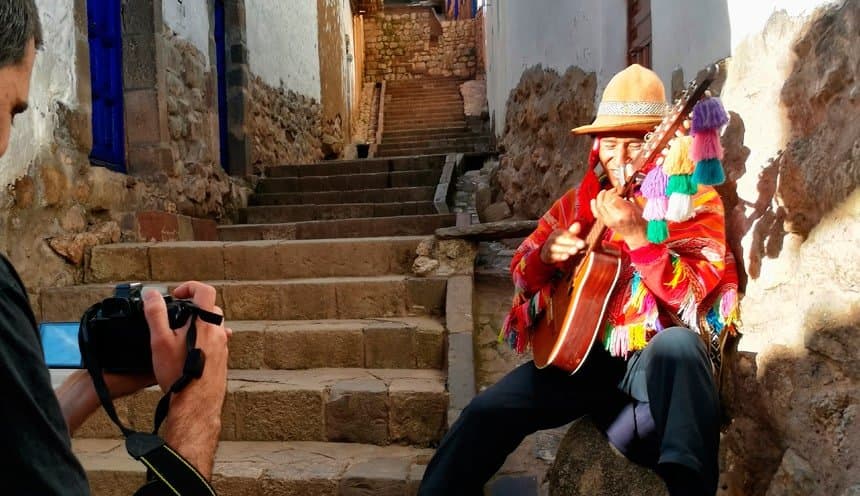
- Cusco Historic Center: The historic perimeter (Plaza de Armas, Plaza Regocijo, San Blas, Santa Ana) is monitored by Tourist Police (POLTUR) and high-definition municipal cameras 24 hours a day. Violent crime here is practically non-existent.
- The Main Annoyances: The primary friction you will encounter in Cusco is persistent street hawkers selling oil paintings, alpaca finger puppets, or massage coupons around the Plaza de Armas. A polite, firm "No, gracias" accompanied by continued walking is all that is required.
- San Pedro Market Caution: The sprawling San Pedro Market is a vibrant culinary feast, but its narrow interior aisles are packed with locals and visitors. Keep your daypack zipped in front of your chest and avoid dangling expensive DSLR cameras loosely from your neck.
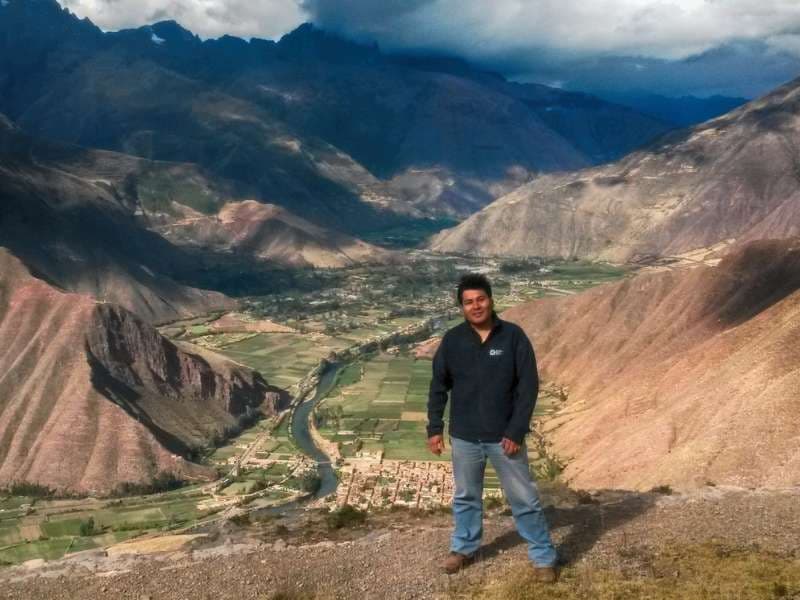
- The Sacred Valley (Urubamba, Pisac, Ollantaytambo): Rural valley towns have crime rates near zero. Locals leave shop doors open and children walk alone to school. You can stroll through cobblestone streets in Ollantaytambo at 10:00 PM in complete tranquility.
6 Common Tourist Scams (And How to Outsmart Them)
Scams in Peru are rarely sophisticated. They rely on distraction and traveler inexperience. Here are the six you must recognize:
1. The Distraction Spill ("Mustard / Bird Dropping" Trick)
While you walk through a crowded plaza in Lima or Cusco, someone accidentally splashes liquid (mustard, water, or fake bird droppings) onto your jacket. An overly friendly bystander rushes up with tissues to help you wipe it off. While you look down and are distracted, their accomplice smoothly lifts your phone or wallet from your daypack.
- The Rule: If anyone spills anything on you, step back immediately, put both hands on your pockets, say "No, leave me alone", and walk into the nearest hotel lobby or open restaurant to clean yourself.
2. The Synthetic "Baby Alpaca" Trap
Shopkeepers in tourist markets swear on their family honor that a S/ 40 Soles ($11 USD) scarf is "100% pure Baby Alpaca from the first shearing". In reality, 95% of cheap market textiles are 100% synthetic acrylic spun in local textile mills.
- The Rule: Genuine baby alpaca is cool to the touch when first handled, has noticeable heft, and smells faintly of sheep’s wool when wet. If you want certified luxury alpaca, visit established boutiques like Kuna or Sol Alpaca, or read our dedicated souvenir guide.
3. The Counterfeit Currency Switch
When paying with a high-denomination bill (S/ 50 or S/ 100 Soles), an unscrupulous street vendor or taxi driver quickly drops your real note behind the counter, pulls out a pre-printed counterfeit note, and hands it back claiming: "This bill is fake, give me another one."
- The Rule: Memorize the last 3 digits of your banknote’s serial number before handing it over, or pay with exact change (S/ 10, S/ 20 notes and coins). Check every watermark and color-shifting ink numeral (tilt the bill to watch the numeral shift from green to blue).
4. The Unofficial "Ruins Guide" at Temple Gates
At the gates of Sacsayhuamán, Ollantaytambo, or Machu Picchu, individuals wearing unofficial lanyards claim: "Guide service is legally mandatory today; you cannot enter without me, $50 USD cash."
- The Rule: While official regulations at Machu Picchu encourage licensed guiding, rangers at ticket turnstiles will never force you to hire an unauthorized tout outside the gate. Only hire guides displaying official red-and-white plastic DIRCETUR credentials bearing their official license number, or reserve vetted collegiate guides through our Official Guides Directory.
5. Fake Mineral Stones at Rainbow Mountain
Local vendors on the trail to Vinicunca or Palcoyo offer small, brilliantly striped rock specimens claiming they were chipped from the sacred rainbow crest. Many are ordinary limestone dipped in commercial industrial dye.
- The Rule: Admire the mountain crest with your eyes and leave the geology intact. Removing mineral samples from protected national sanctuaries violates SERNANP environmental regulations.
6. The "Broken Meter" / Fixed Taxi Fare Inflation
A driver quotes you S/ 10 Soles verbally. When you arrive at your hotel, he aggressively insists he said "$10 Dollars" or demands extra cash for opening the trunk.
- The Rule: Always confirm the price in Peruvian Soles before setting foot in the vehicle: "¿Diez Soles por todo, incluyendo maletas, correcto?". Have exact change ready so the driver cannot claim they have no coins for change.
Civil Strikes & Protests: How Local Operators Handle Them
International news media frequently sensationalizes civic protests (paros) in South America, making travelers believe the entire country is engulfed in conflict.
Here is the ground truth about protests in Peru:
- What They Are: Strikes in the Andes are organized civic protests led by regional transport unions, agricultural federations, or local communities petitioning the central government for local roads, schools, or mining royalties.
- Are Tourists Targeted? No. Demonstrators in Peru do not target foreign visitors. Protests typically take the form of temporary roadblocks (stones and tree branches placed across interprovincial highways) to halt commercial bus and truck transit.
- The 48-Hour Warning Window: In Peru, formal strikes are almost never spontaneous. Union leaders announce strike dates 48 to 72 hours in advance through local radio and regional assemblies.
- How Local Operators Keep You Safe: This advance notice is where booking with a licensed local operator in Cusco becomes your greatest insurance policy. When a road strike is called between Cusco and the Sacred Valley, our dispatch team adjusts departure times—transferring our travelers at 4:30 AM before blockades are erected, or rerouting vehicles along secondary valleys. While independent travelers relying on public combis get stranded at bus terminals, organized small groups continue their journey smoothly.
Solo Female Travel in Peru: Frank Ground Advice
Peru is one of the most popular solo female backpacking and travel destinations in South America. Tens of thousands of women travel from the Amazon to Machu Picchu independently every year with exceptional experiences.
That said, patriarchal cultural attitudes (machismo) exist in Latin America, primarily manifesting as unsolicited street catcalling (piropos).
Here are practical rules for solo female travelers:
- Ignore Street Comments: If men make passing comments ("Hola, linda", "Guapa"), treat them like background street noise. Do not make eye contact, do not smile out of politeness, and keep walking with confident posture. Engaging or arguing only invites further interaction.
- Nighttime Mobility: Never walk alone along quiet streets or through dimly lit plazas after 10:00 PM, especially in downtown Lima or around Cusco's San Pedro train station. Always use Uber, Cabify, or have your restaurant call a registered radio taxi.
- Drink Spiking Awareness: While rare in upscale establishments, drink spiking can occur in budget party hostels and late-night nightlife bars. Never leave your pisco sour or beer unattended, and never accept open drinks handed to you by strangers.
- Choose Quality Group Excursions: For remote wilderness treks (Salkantay, Inca Trail, Ausangate), join small-group guided departures with certified operators rather than hiring unverified freelance guides off social media forums. Our small-group Peru Highlights Journeys maintain strict safety oversight and collegiate guide vetting on every mountain trail.
Cash Safety & The Strict Dollar Rule
Money handling in Peru requires understanding two unique banking quirks:
- The Pristine US Dollar Rule: Peruvian banks, currency exchange houses (casas de cambio), and hotels enforce an unforgiving standard for US Dollars. If a $20, $50, or $100 bill has a tiny 1-millimeter tear on the edge, a pen mark, an ink stamp, or excessive creasing, it will be flatly rejected everywhere in Peru. Before leaving home, visit your local bank branch and specifically request brand-new, crisp, uncirculated banknotes.
- ATM Safety: Never use standalone, unbranded ATM machines placed on dark street corners or inside tourist convenience stores. Only withdraw cash from bank ATMs located inside an official bank branch lobby (such as BCP, BBVA, or Scotiabank) during daytime hours. In Cusco, Banco de la Nación (located on Avenida El Sol) is beloved by travelers because it does not charge foreign debit card usage fees, whereas private banks tack on S/ 18 to S/ 30 Soles per withdrawal.
- The "Two-Wallet" System: Keep your primary credit cards, passport, and the bulk of your travel cash locked inside your hotel room safe. In your daypack or front pocket, carry only the cash you plan to spend that day (S/ 100 to S/ 150 Soles) and a single backup credit card.
Emergency Contacts & Tourist Police (POLTUR)
Before you land in Peru, program these essential emergency numbers directly into your phone’s contact list:
- POLTUR (Peruvian Tourist Police - 24/7 National WhatsApp):
+51 980 849 076
(English-speaking officers available 24/7 across Peru to mediate taxi disputes, lost passports, or travel emergencies). - POLTUR Central Office (Lima): (01) 460-1060
- National Police Emergency Dispatch (Policía Nacional): 105
- SAMU (National Medical Ambulance Service): 106
- Fire & Rescue Department (Bomberos): 116
- Daspe Travel 24/7 Operations Desk (Cusco): +51 926 415 460
Local Guide Pro-Tip: Download the free WhatsApp app before traveling. In Peru, 99% of customer service, tour operators, hotel desks, registered taxi companies, and emergency services operate entirely over WhatsApp messaging and voice calls.
Our Local Team Verdict: Rules for a Worry-Free Trip
Travel safety is not about living in fear—it is about removing easy opportunities for opportunists so you can immerse your senses in the breathtaking magic of the Andes.
As our Operations Director David emphasizes to every incoming traveler:
- Use registered app transport in Lima: Let Uber or official airport desks handle your city transit.
- Dress comfortably, not flashily: Leave expensive Swiss watches, gold chains, and designer handbags at home. The Andes call for merino wool, trail runners, and practical layers.
- Keep your phone secured: Enjoy the view with your eyes, and step inside a cafe or away from traffic before pulling out your smartphone to check maps.
- Trust local advice: Listen to your guides in Cusco and the Sacred Valley. We walk these trails every day and care deeply about your well-being.
Follow these simple, time-tested habits, and you will find that the warmth, hospitality, and generosity of the Peruvian people will be the highlight of your entire journey.