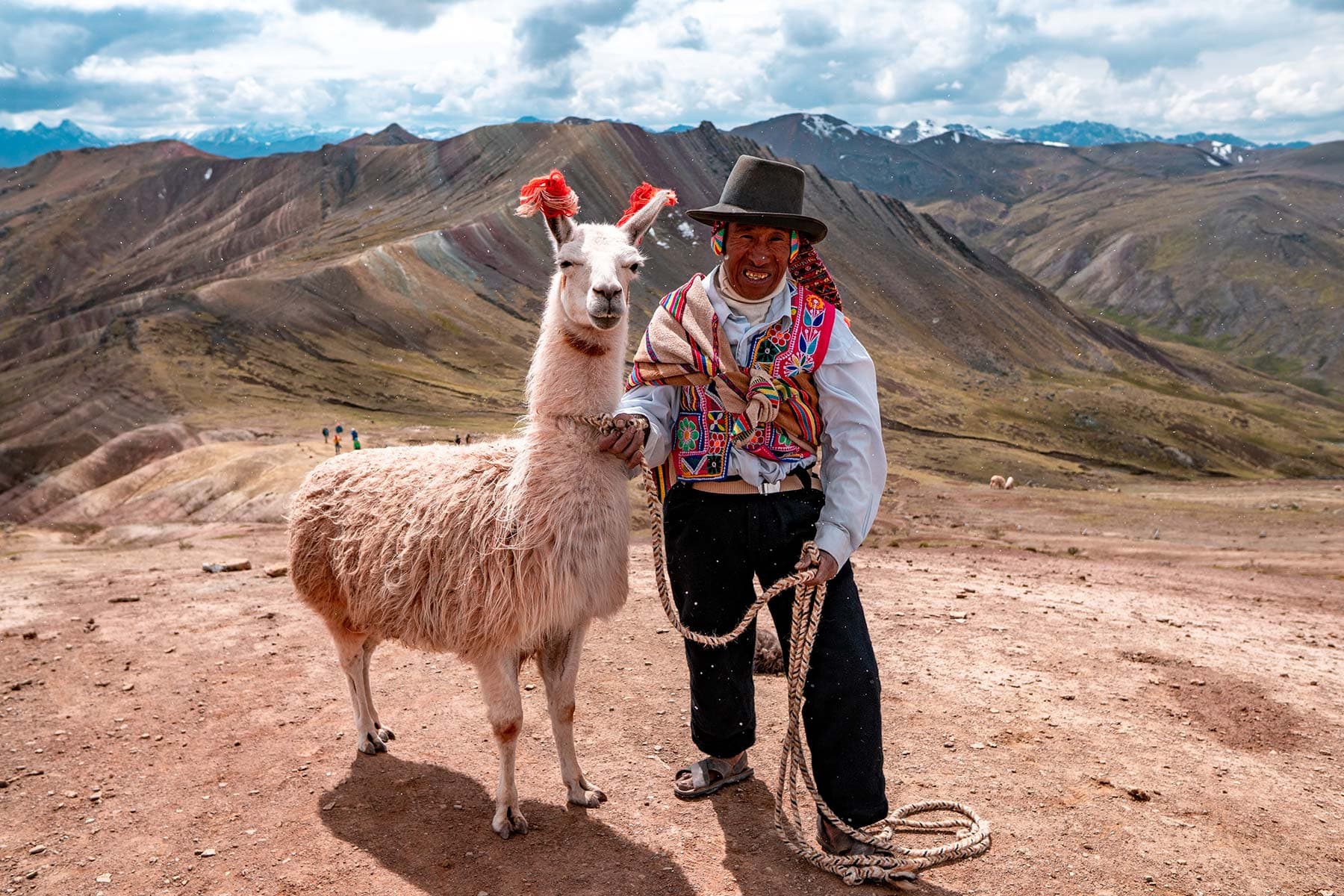
Few natural wonders in South America have exploded across social media like Vinicunca—the legendary Rainbow Mountain of Peru. With its vibrant turquoise, gold, magenta, and lavender mineral stripes set against snowy Andean peaks, it looks like a scene painted by the gods.
Yet beneath the viral Instagram photos lies an uncompromising physiological truth:
The summit ridge of Vinicunca sits at 5,036 meters (16,522 feet).
To put that elevation into perspective:
- It is 615 meters higher than Mount Whitney, the tallest peak in the contiguous United States (4,421 m).
- It is 227 meters higher than Mont Blanc, the highest mountain in Western Europe (4,809 m).
- Atmospheric oxygen pressure is cut in half (52% of sea level).
Every single week in Cusco, emergency clinics treat exhausted travelers who booked an express Rainbow Mountain tour on their second day in Peru, only to collapse on the trail vomiting blood, hyperventilating, and requiring emergency horse evacuation.
It does not have to be this way.
Here are the 5 guide-tested secrets our mountain expedition leaders use to guide hundreds of travelers to the summit safely, comfortably, and sickness-free.
Secret 1: The Acclimatization Calendar (The Day 4 Rule)
The single biggest mistake tourists make is booking Rainbow Mountain on Day 1 or Day 2 of their trip because "it is just a day hike."
A day hike at sea level is recreation; a day hike above 5,000 meters is an extreme alpine expedition.
The Golden Calendar Rule: Never step onto the Rainbow Mountain trail until you have spent at least 72 full hours (3 full days) acclimatizing in Peru, including at least two nights sleeping at elevation.
The Ideal Preparation Schedule:
- Day 1: Land in Cusco, descend immediately to sleep in the Sacred Valley (2,870 m / 9,416 ft).
- Day 2: Gentle walking at Maras & Moray (3,500 m / 11,480 ft), sleep low in the valley.
- Day 3: Visit Machu Picchu Citadel (2,430 m / 7,972 ft), ascend to sleep in Cusco (3,399 m / 11,152 ft).
- Day 4 or 5: Now—and only now—is your bloodstream carrying enough red blood cells and stabilized blood pH to tackle 5,036 meters at Vinicunca.
Secret 2: Master the Paso de Chasqui (Rhythmic Breath Pacing)
When hikers start climbing the trail from the Cusipata parking lot (4,600 m / 15,090 ft), many feel surprisingly good during the first 10 minutes. They walk briskly, chat with friends, and overtake slower walkers.
Ten minutes later, they hit the physiological "wall": heart rates spike to 175 BPM, quads seize up with lactic acid, and panic sets in.
In the high Andes, our guides teach the ancient Incan messenger cadence: The Paso de Chasqui.
The Paso de Chasqui Cadence Cycle:
- Step 1: Inhale deeply through nose on forward stride.
- Step 2: Exhale fully through mouth on landing stride.
- Step 3: Maintain continuous, uninterrupted slow rhythm.
- Result: Zero lactic acid spikes, stable heart rate, and successful summit arrival.
The Rules of the Chasqui Cadence:
- Sync 1 Step to 1 Breath: Inhale through your nose as your left foot steps forward; exhale through pursed lips as your right foot lands.
- Shorten Your Stride: Take small, 12-inch steps. Never take long, lunging strides on an incline.
- Flat Foot Strike: Land on your entire foot (midfoot/heel), not your toes. Toe-walking burns out your calves in thin air.
- Never Sprint, Never Stop: Walking at an ultra-slow, uninterrupted pace gets you to the summit 30 minutes faster than sprinting for 40 seconds and collapsing over your poles for 3 minutes.
Secret 3: Pulse Oximetry Reality & Danger Thresholds
Our guides carry professional medical pulse oximeters on every high-altitude tour. Understanding your numbers eliminates fear while keeping you safe:
← Desliza horizontalmente para comparar columnas →
| Blood Oxygen (SpO2) | Heart Rate | Clinical Interpretation at 5,000 Meters | Action Protocol |
|---|---|---|---|
| 80% – 88% | 85 – 115 BPM | Normal Alpine Acclimatization | Keep walking steadily using Chasqui breathing. |
| 72% – 79% | 115 – 135 BPM | Borderline Hypoxia | Slow down pace by 30%. Sip warm electrolyte water. |
| 65% – 71% | 135+ BPM | Severe Hypoxia | Stop immediately. Guide administers supplemental O2. |
| Below 65% | Irregular | Acute Danger / Pulmonary Risk | Immediate descent. Mount horse and descend to parking lot. |
Warning Signs That Mean Turn Around: If a hiker experiences sudden confusion, slurred speech, loss of motor balance (stumbling like drunk), or rattling fluid sounds in the chest, this is High-Altitude Pulmonary or Cerebral Edema (HAPE/HACE). The only medicine is immediate descent of at least 500 vertical meters.
Secret 4: The Community Horse Protocol (When to Rent)
Along the trail, indigenous Quechua horsemen (arrieros) offer riding horses for hire.
Many proud hikers refuse a horse at the trailhead, claiming they want to "do it on their own." Two kilometers up the valley, when their head is pounding and nausea strikes, all the horses are gone.
Guide Advice on Horses:
- The Cost: Expect to pay S/ 80 to S/ 100 Soles ($22 to $28 USD) for a one-way ascent. Carry exact cash in Soles; no cards or mobile apps exist in the valley.
- When to Rent: If your resting heart rate feels elevated at the parking lot or you have any doubts about your knees or endurance, rent the horse at the beginning.
- The Final Ridge Reality: Under local community regulations, horses are strictly forbidden from ascending the final steep 300-meter rocky ridge to the summit viewpoint to prevent trail erosion and animal accidents. You must still walk the final 20 to 25 minutes on foot, which means renting a horse saves your energy precisely for the hardest section!
Secret 5: Sub-Zero Windproof Layering (The 4:00 AM Cold)
Rainbow Mountain tours depart Cusco between 3:30 AM and 4:30 AM. When you step out of your transport at the high trailhead at 7:00 AM, the temperature is frequently -4°C to 0°C (25°F to 32°F), with relentless 30–50 km/h katabatic winds howling off the glaciers.
Hikers who arrive in cotton jeans and fashion hoodies freeze within ten minutes. Shivering expends massive calories, rapidly dehydrating your body and triggering altitude headaches.
The 4-Layer System:
- Base Layer: Thermal Merino wool or synthetic long-sleeve top and leggings (never cotton).
- Mid Layer: Insulating fleece jacket or lightweight down sweater.
- Outer Shell: Windproof and waterproof Gore-Tex hardshell jacket with an adjustable hood.
- Accessories: Windproof thermal gloves, warm fleece beanie covering your ears, polarized UV sunglasses (snow glare at 5,000m causes corneal sunburn), and SPF 50+ mineral sunscreen.
The Emergency Alternative: Why Palcoyo Is 10x Easier
If reading this guide makes you realize that an extreme 5,036-meter mountain climb is not right for your fitness level or family, do not despair.
There is a gentler, far more peaceful alternative: The Palcoyo Rainbow Mountain.
- Vinicunca: Punishing 2-hour steep ascent, massive crowds (1,500+ tourists daily), high altitude sickness incidence, requires 3:30 AM departure.
- Palcoyo: Tourist transport drives you all the way to 4,700 meters. The walk along a flat, undulating ridgeline is only 40 to 45 minutes of gentle strolling, you view three distinct rainbow mountains, walk through a surreal stone forest (Bosque de Piedras), and encounter less than 10% of the crowds.
Frequently Asked Questions (FAQ)
Should I take Diamox before Rainbow Mountain?
If you are already acclimated to Cusco, a small dose of Acetazolamide (125 mg) taken the evening before can help maintain blood oxygenation during the rapid early morning ascent. Consult your personal doctor before travel.
Can I buy water and food along the trail?
Yes, local indigenous families sell bottled water, Gatorade, chocolate bars, and hot coca tea from small stone huts along the trail. Always carry small cash bills (S/ 5, S/ 10, S/ 20).
What happens if it snows?
In the Andes, mountain weather changes in minutes. If a sudden squall hits, the colorful stripes may be temporarily covered in a dusting of white snow. Our guides monitor satellite weather radar before departing Cusco.
Local Team Advice: Rodrigo's Summit Safety Rule
As our Official Mountain Guide Rodrigo notes:
"The summit of Vinicunca is not a prize to conquer at the expense of your health. The high Andes demand humility. Acclimate for three days, walk with the gentle Chasqui breath, listen to your guide, and when you reach that 5,036-meter ridge, you will not be sick—you will be standing on top of the world with your heart singing."