
Peru is one of the most culturally enriching, ecologically diverse, and genuinely hospitable nations on planet Earth.
However, where massive international tourism flourishes, commercial opportunism inevitably follows. In hubs like Cusco, Lima, and Aguas Calientes, unsuspecting travelers frequently fall victim to deceptive pricing, substandard safety practices, and synthetic souvenirs disguised as indigenous craftsmanship.
At Daspe Travel, our foundational ethos is radical transparency and zero deception. We believe travelers deserve boots-on-the-ground truth rather than polished marketing slogans.
Here are the 10 most pervasive tourist traps in Peru—and the authentic, ethically grounded local alternatives to choose instead.
Trap 1: The Aggressive Plaza de Armas Restaurant Touts
- The Trap: Walking around the perimeter portals of Cusco’s Plaza de Armas, pushy touts thrust laminated neon menus into your face offering: "Free pisco sour, free garlic bread, tourist menu for S/ 25 Soles!" The food is pre-cooked, bland, heated in microwaves, and billed with surprise 18% "service" markups.
- The Smart Alternative: Walk just two blocks away from the main square. Head up to San Blas or Plazoleta Nazarenas to dine at authentic establishments, traditional picanterías, or contemporary Andean bistros like Cicciolina, Pachapapa, or Morena Peruvian Kitchen.
Trap 2: Street Alpacas for S/ 5 Photo Ops
- The Trap: Women and children dressed in vibrant indigenous skirts carry baby alpacas or lambs wrapped in blankets on street corners, offering photo opportunities for a "tip" of S/ 5 to S/ 10 Soles. In reality, many of these animals are separated from their mothers prematurely, kept in dark rooms without proper grazing, and given sedatives to remain calm amidst traffic.
- The Smart Alternative: Visit ethical camelid sanctuaries and indigenous community weaving centers like Awanakancha on the Sacred Valley highway or community cooperatives in Chinchero. Here, adult alpacas, llamas, and vicuñas roam freely in open pastures, grazed on fresh ichu grass, and sheared humanely.
Trap 3: The $15 Rainbow Mountain Cattle Call
- The Trap: Budget street agencies advertise Rainbow Mountain (Vinicunca) day tours for S/ 60 to S/ 80 Soles ($16–$22 USD). You are packed like sardines into an old 40-passenger bus departing late at 4:30 AM, driven recklessly over mountain ledges, and arrive at the 5,036m (16,520 ft) pass at 11:30 AM alongside 2,500 screaming tourists. Guides carry zero pulse oximeters and no medical oxygen.
- The Smart Alternative: Book an early-departure private tour to Palcoyo Rainbow Mountain (the gentler, crowd-free alternative with three colorful ridges and an easy 45-minute flat walk), or depart at 3:00 AM for Vinicunca with a certified alpine guide carrying medical oxygen, reaching the summit before the mass crowds arrive.
Trap 4: The '100% Baby Alpaca' $15 Street Sweaters
- The Trap: Souvenir stalls sell cozy knit sweaters tagged "100% Baby Alpaca" for S/ 50 to S/ 70 Soles ($13–$19 USD). In reality, these garments are 100% synthetic acrylic spun in industrial textile factories in Bolivia and Lima. They pill, sweat, and melt into hard plastic when exposed to flame.
- The Smart Alternative: Pure baby alpaca fiber costs money to harvest and spin. Expect to pay $90 to $160 USD (S/ 330 to S/ 600 Soles) at certified artisan cooperatives like Centro de Textiles Tradicionales del Cusco (CTTC) or established heritage boutiques like Kuna and Sol Alpaca.
Trap 5: Curbside Airport Taxis at Lima & Cusco
- The Trap: Stepping out through the exit sliding doors at Jorge Chávez Airport (LIM) in Lima or Alejandro Velasco Astete (CUZ) in Cusco, unregulated taxi drivers aggressively shout "Taxi, amigo, best price!" accepting passengers without meters, licenses, or commercial passenger insurance.
- The Smart Alternative: At Lima airport, book strictly at the official indoor concession booths located before exiting into the public hall (Taxi Green, Taxi 365, or Taxi Directo). In Cusco, arrange private chauffeur transfers in advance through your tour operator.
Trap 6: High-Pressure 'Free Walking Tours'
- The Trap: Walking tours advertised as "100% Free" where guides spend 20 minutes on history and 90 minutes leading large groups into specific jewelry stores, souvenir shops, and chocolate factories where they collect aggressive 25% kickbacks on everything you buy, followed by coercive demands for high tips.
- The Smart Alternative: Hire an official licensed tour guide (Guía Oficial de Turismo) for a private, customized walking exploration of Cusco’s historic center. A professional private guide answers your specific historical questions and has zero commercial interest in steering you into souvenir shops.
Trap 7: Arriving at the Machu Picchu Train with Big Suitcases
- The Trap: Packing a 25 kg (55 lb) rolling hardshell suitcase for your overnight excursion to Machu Picchu, only to be rejected at the PeruRail or Inca Rail turnstile at Ollantaytambo station because of the strict 5.0 kg (11 lb) baggage limit.
- The Smart Alternative: Pack a light 30L to 40L daypack containing your change of clothing, hiking boots, rain jacket, and toiletries. Leave your large rolling suitcases locked safely in your Cusco or Sacred Valley hotel; 100% of reputable hotels provide free, secure luggage storage (custodia de equipaje).
Trap 8: Buying S/ 15 Water at the Machu Picchu Gates
- The Trap: Arriving at the main entrance turnstiles of Machu Picchu and realizing you forgot water, having to pay S/ 15 Soles ($4 USD) for a tiny 500ml plastic bottle at the snack counter, or having disposable single-use plastic bottles confiscated by park rangers.
- The Smart Alternative: Buy your snacks and bottled water in the town of Aguas Calientes (where a 2.5-liter bottle costs barely S/ 4 Soles), and pour it into a reusable aluminum water bottle or hydration bladder before boarding the 25-minute shuttle bus to the ruins.
Trap 9: Mass Industrial Tour Bus Buffets in Urubamba
- The Trap: Large group tours stop at cavernous buffet halls along the Urubamba highway where 400 tourists line up with plastic trays for lukewarm stir-fried noodles, tough meat, and watered-down fruit punch.
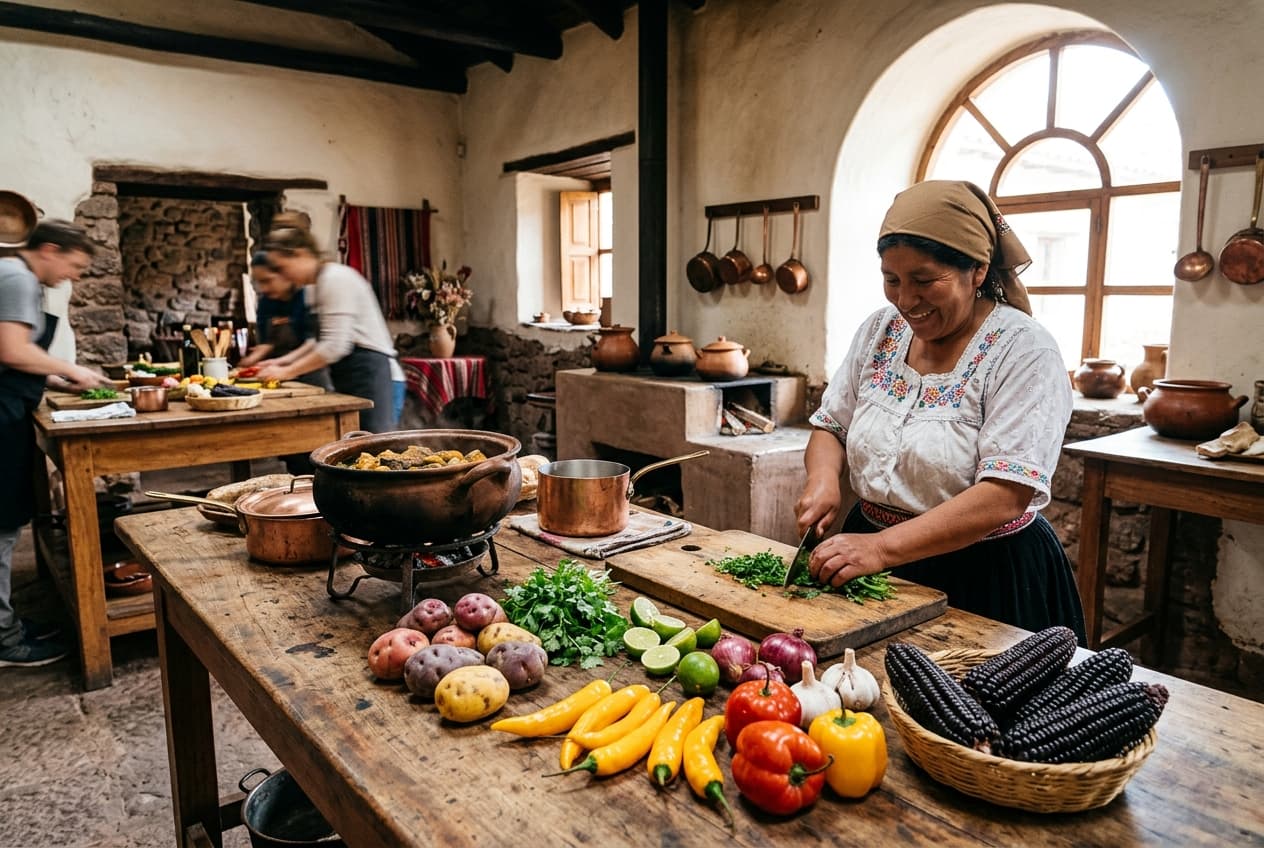
- The Smart Alternative: Opt for private culinary stops: a gourmet farm-to-table lunch at El Albergue Organic Farm in Ollantaytambo, a traditional underground Pachamanca feast in Urubamba, or an elegant garden lunch at Hacienda Huayoccari.
Trap 10: Unlicensed 'Tour Operators' with Fake Badges
- The Trap: Booking treks or day excursions from makeshift booths on Calle Plateros or Procuradores bearing photocopied signs and fake government logos. When strikes, road closures, or cancellations occur, these operators vanish, leaving travelers stranded with zero refunds.
- The Smart Alternative: Verify that your tour operator is an officially licensed travel agency registered with the Ministry of Foreign Trade and Tourism (MINCETUR) and holds an active corporate tax ID (RUC). Legitimate operators operate physical offices with verifiable 24/7 emergency dispatch logistics.