Why Lima is South America's Food Capital
Travelers visiting Peru often arrive with Machu Picchu at the top of their list. Yet within 48 hours of landing in Lima, many find that Peru's gastronomy is just as memorable as its archaeology.
Peru combines three distinct geographic regions:
- An ocean rich in marine life driven by the cold Humboldt current.
- Andean mountain valleys cultivating thousands of native potato and corn varieties.
- The Amazon basin providing unique fruits, river fish, and botanical herbs.
Today, travelers frequently spend 2 to 3 nights in Lima to explore its distinct dining districts:
- Miraflores: Seaside cevicherías, cocktail lounges, and active produce markets like Mercado Surquillo N° 1.
- Barranco: Historic republican architecture, coffee roasteries, and acclaimed restaurants including Kjolle, Mérito, and Isolina.
- San Isidro: Quiet residential avenues, olive groves, and established dining institutions like Astrid & Gastón at Casa Moreyra.
Reserving at Central & Maido
Securing a table at Lima's best-known fine dining restaurants requires forward planning:
1. Central (Virgilio Martínez & Pía León)
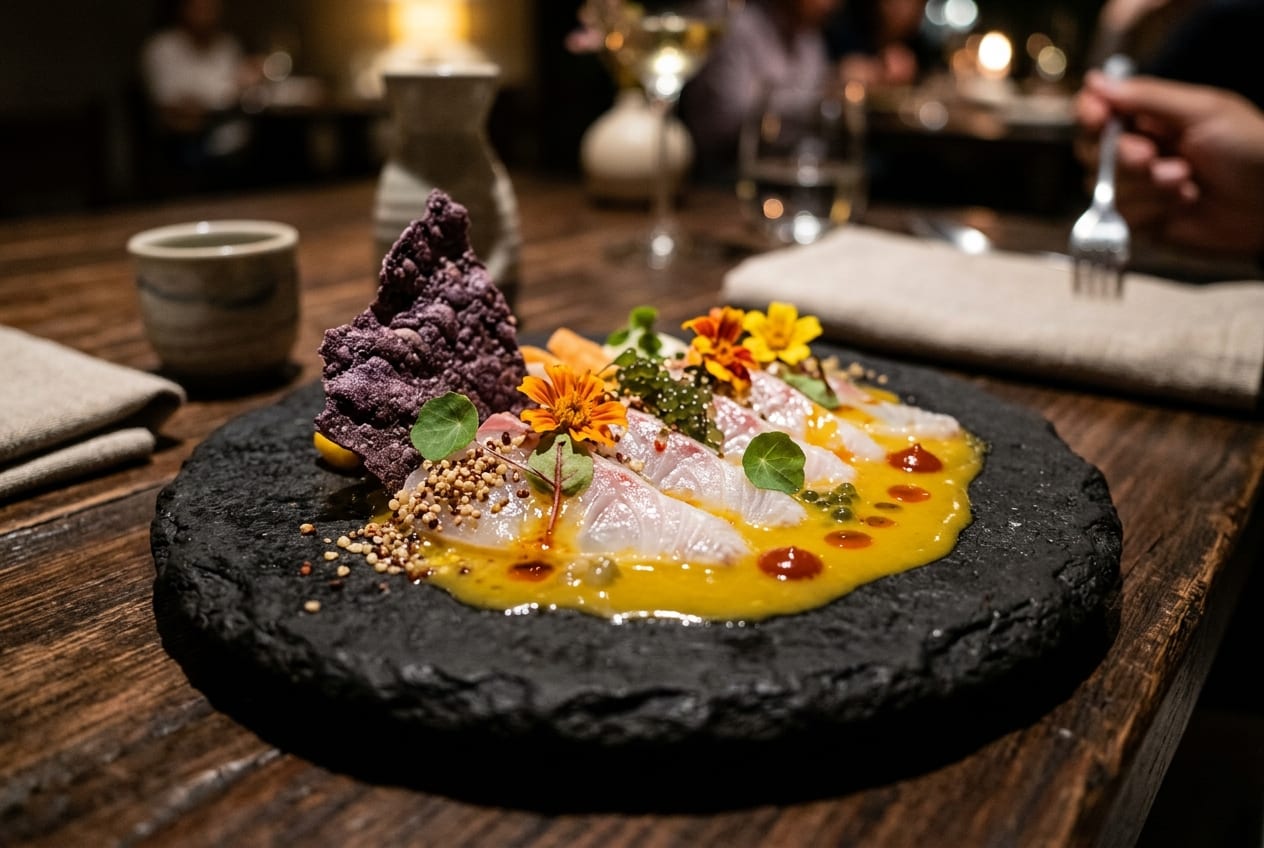
- Focus: The Alturas Mater tasting menu takes diners through Peru's ecological elevations, from marine ingredients below sea level to high-altitude tubers and edible cyanobacteria (cushuro) from Andean tarns at 4,200 meters.
- Reservation Window: Central opens reservation periods every 3 to 4 months on their official website. Dates are announced in advance on their official channels, typically opening at midnight Lima time (UTC-5).
- Waitlists: If your travel dates are full, add your name to their online waitlist; tables occasionally open up 48 hours prior when travel plans change.
2. Maido (Mitsuharu "Micha" Tsumura)
- Focus: A benchmark for Nikkei cuisine—the century-old harmony of Japanese culinary techniques and coastal Peruvian ingredients. Dishes feature Amazonian paiche, slow-braised short ribs with native chiles, and nigiri sushi glazed with local reductions.
- Reservation Window: Maido opens tables 90 days in advance on the 1st of each month at 10:00 AM Lima time.
Beyond the Big Two: Kjolle, Mérito, and Criollo Taverns
If reservation dates at Central or Maido do not match your travel dates, Lima has a wide range of exceptional dining alternatives:
- Kjolle (Barranco): Led by chef Pía León inside the same Casa Tupac compound as Central. It offers a vibrant menu celebrating seasonal biodiversity with an innovative beverage program.
- Mérito (Barranco): Led by Juan Luis Martínez, focusing on wood-fired cooking, Andean tubers, and grilled coastal seafood in an understated setting.
- Isolina Taberna Peruana (Barranco): Generous, authentic family-style portions of traditional comida criolla: slow-braised beef shanks, seco de asado de tira, and classic causa limeña.
- Canta Rana (Barranco): A classic neighborhood spot popular for fresh ceviche mixto and cold local beer.
Ceviche Timing & Market Food Safety
To enjoy seafood and market food comfortably, keep these practical points in mind:
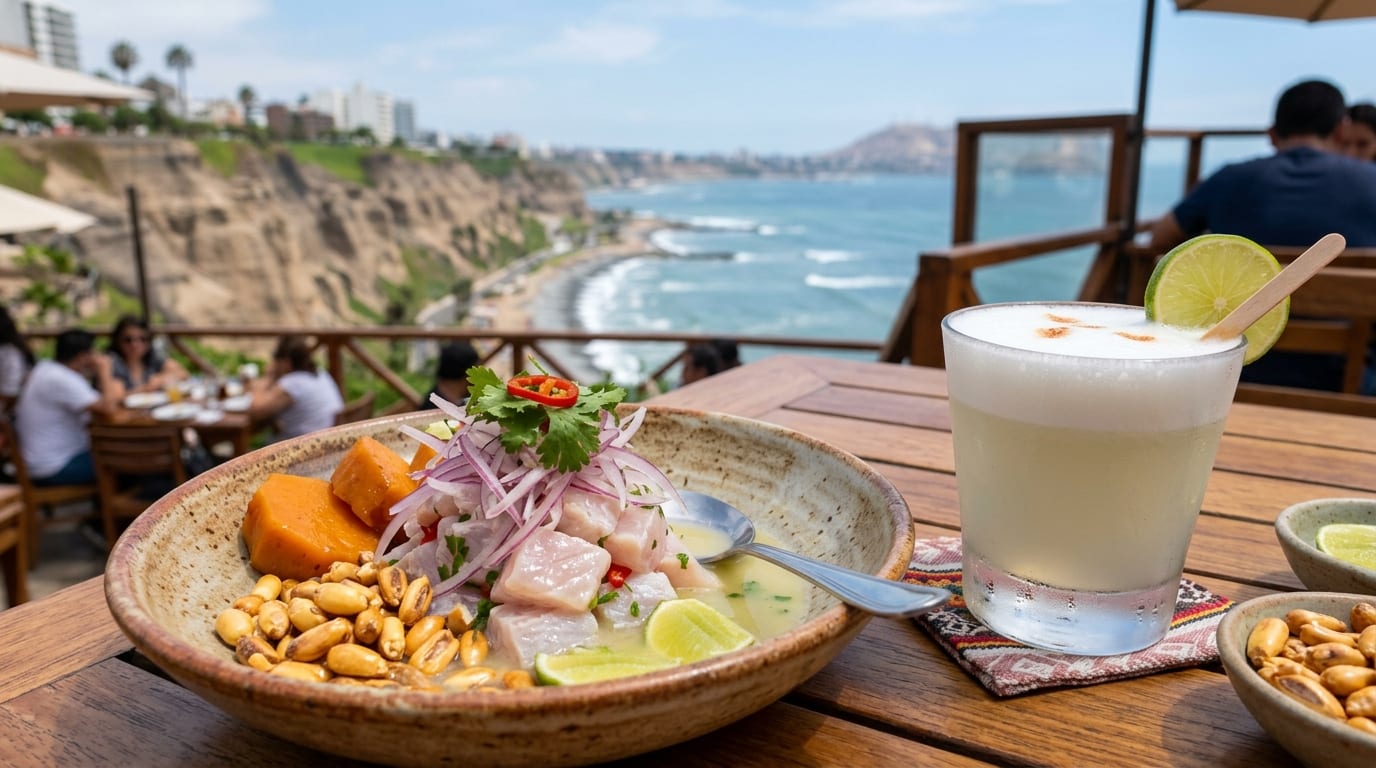
- Eat Ceviche for Lunch: In Lima, ceviche is traditionally enjoyed between 11:30 AM and 3:30 PM. Fishing boats arrive at Callao and Chorrillos at dawn, ensuring fish served at lunchtime is fresh from the morning catch.
- Explore Surquillo Market N° 1: A short walk from Miraflores, this market provides a great look at local fruits, chiles (rocoto, ají amarillo), and fresh herbs. A guided food walk ensures you visit vetted stalls with reliable hygiene.
- Pisco Sour Balance: A classic Pisco Sour uses dry Quebranta pisco, freshly squeezed Peruvian key lime juice, simple syrup, and whipped egg white, topped with a dash of aromatic bitters.
The Andean Tradition: Sacred Valley Pachamanca
When traveling from the coast to Cusco (3,399 m / 11,152 ft), regional cuisine shifts toward ancestral earth cooking.
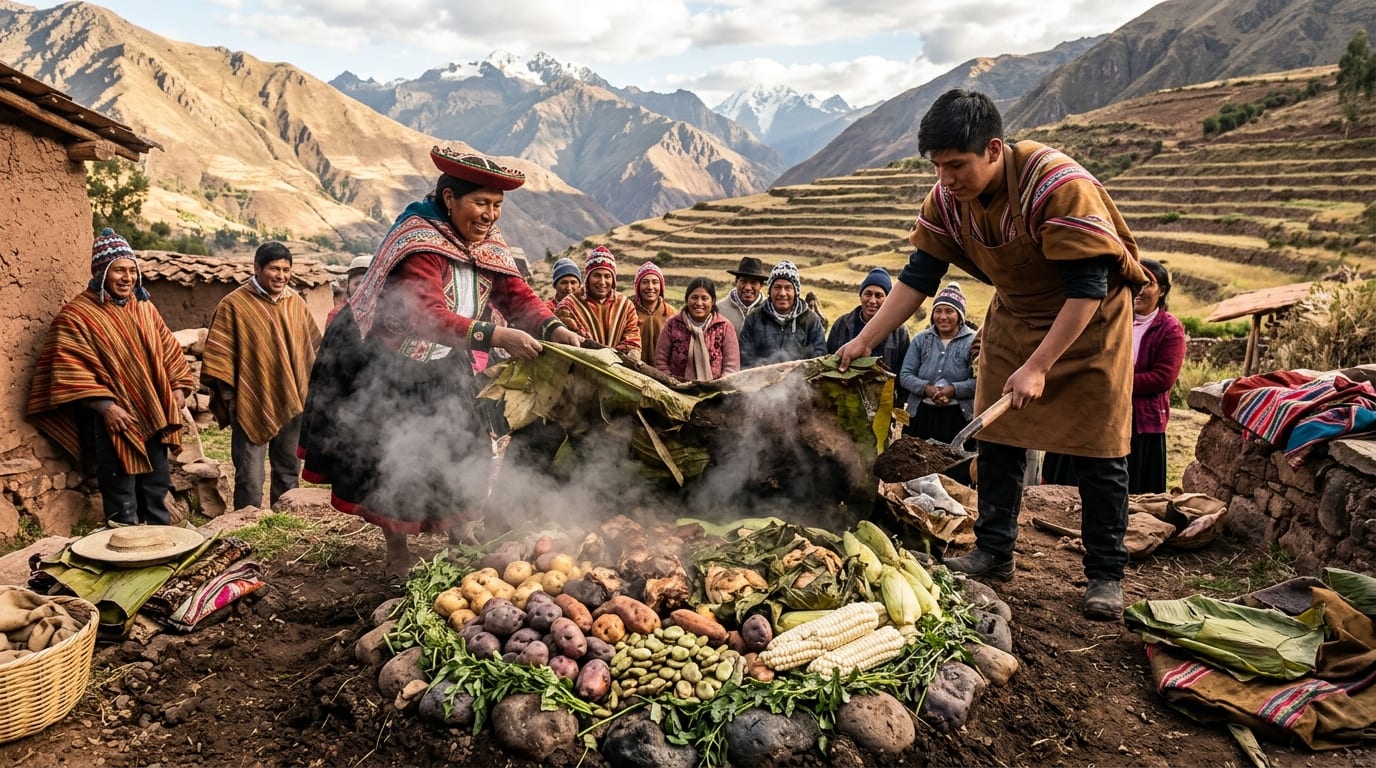
The hallmark of Andean culinary tradition is the Pachamanca (Pacha meaning Earth, and Manka meaning pot or oven in Quechua):
- Heated Volcanic Stones: Porous volcanic rocks are heated over a wood fire until glowing hot.
- Layering Under the Earth: A shallow pit holds the hot stones, layered with marinated pork, lamb, and chicken, followed by native potatoes, sweet potatoes, broad beans (habas), and sweet corn humitas.
- Native Herbs: Wild herbs—principally Huacatay (black mint) and Chincho—infuse the ingredients with fragrant steam before the pit is sealed beneath damp canvas and clean soil.
- The Result: After roughly 90 minutes of subterranean cooking, the pit is opened, yielding tender, herb-roasted meats and vegetables.
Building Your Food Itinerary in Peru
To balance culinary highlights with travel comfort:
- Days 1–2 (Lima Coast): Settle in at sea level. Dedicate one day to market visits and casual dining in Barranco, and your second day to a tasting menu at Central, Maido, or Kjolle.
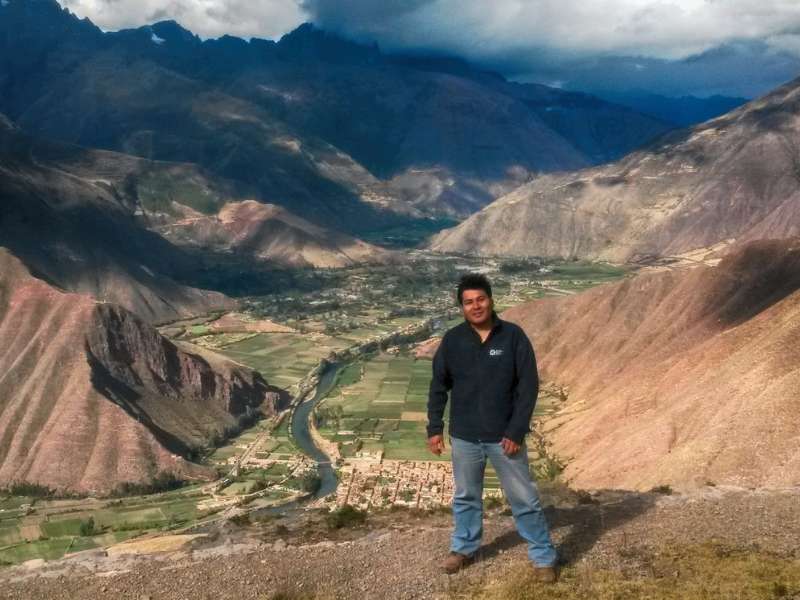
- Day 3 (Transfer to the Sacred Valley): Fly from Lima to Cusco, but continue directly to the Sacred Valley (2,870 m / 9,416 ft) for easier initial acclimatization.
- Day 4 (Andean Cooking): Experience a traditional Pachamanca earth feast paired with visits to Moray and the Maras salt ponds.
- Days 5–6 (Machu Picchu & Cusco): Take the scenic train to Machu Picchu, returning to Cusco to explore the cafes and artisan bakeries of San Blas.